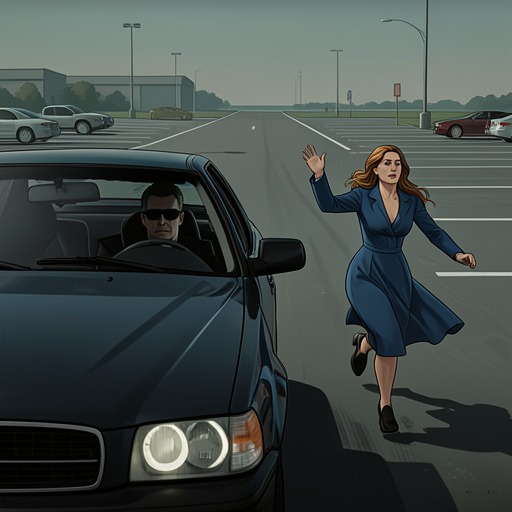
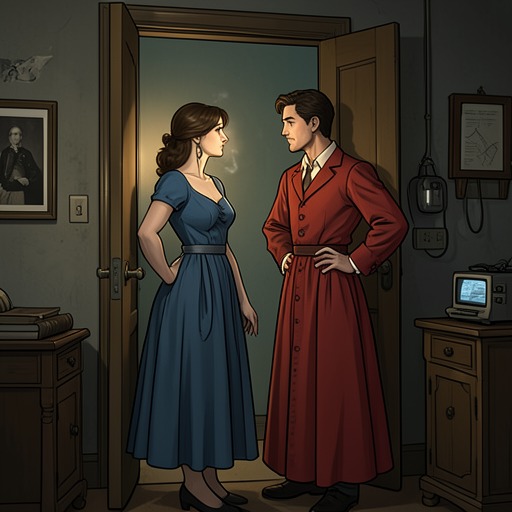
Freddy Sykes, paralyzed by Eric Wu
Just One LookFreddy Sykes, paralyzed by Eric Wu, is a forty-eight-year-old resident of Ho-Ho-Kus whose life is briefly glimpsed through an online profile, the home he inherited from his mother, and the consequences of Eric Wu’s assault. Wu selects him because he is isolated and lives close to the Lawson household; after deceiving him online, Wu leaves him alive but unable to move freely. Freddy’s story shows how the details of an apparently ordinary life can become vulnerabilities in the hands of a predator.
Identity and Background
Freddy works for a storefront tax-filing company in Waldwick, New Jersey. Both of his parents are dead, he has no siblings, and he inherited his house in Ho-Ho-Kus after his mother died two years earlier. The house is only three miles from the Lawson residence, a proximity that matters to Wu’s plans. Freddy had spent years caring for his mother; the biography on his online dating profile said that this had left little time for a relationship.
The profile places Freddy on BiMen.com, where he has been corresponding for three weeks with someone using the name Al Singer. The account presents Singer as a fifty-six-year-old retired Exxon executive who had been married for twenty-two years before acknowledging an interest in relationships with both men and women. It portrays him as still loving his wife, despite her not understanding that interest, and as someone drawn to European travel, fine dining, and televised sports. These are details of a constructed persona, not an independently established account of a real correspondent.
Wu chose a photograph taken from a YMCA online catalogue for the profile. He wanted Singer to look plausible and appealing without seeming so attractive that Freddy would become suspicious. The exchange is thus built around manufactured familiarity: Wu supplies an account that seems specific enough to invite trust, while Freddy’s own profile and circumstances give Wu the information to identify him as a suitable target.
Selection and Assault
Wu’s choice of Freddy follows a practical assessment. He seeks people with few close ties and no children, nearby relatives, roommates, demanding jobs, or extensive circles of friends. Freddy fits that pattern, and his location also serves Wu’s immediate need for someone near the Lawson home. The narration describes Wu as widening his search beyond women because he believes men may be less alert to online threats. Freddy is not selected because of a personal dispute; he is chosen because Wu sees his circumstances as offering opportunity and concealment.
Wu also observes the house and its surroundings. Freddy’s neighbors are mostly young families who pay little attention to him, and the home looks much like the others on the block. Its attached garage lets a person enter or leave by car without being seen. Wu treats these ordinary features as advantages: they reduce the chance that Freddy’s movements will attract notice and make the house easier to approach unseen.
When Freddy asks who sent the gifts associated with the Singer persona, Wu identifies the sender as Mr. Singer. Freddy opens the deadbolt, and Wu immediately forces his way inside and overpowers him. The attack is swift; the scene does not establish a personal confrontation between the two men. Instead, it completes the deception by turning an online identity Freddy has been corresponding with into an in-person threat.
Injury and Immediate Consequences
Wu deliberately leaves Freddy alive. An unconscious or dead victim would be less useful to him: Freddy can still call his employer to say that he needs time off, provide a bank-card PIN if Wu wants money, and respond to messages if someone contacts him. Wu also considers the practical problem of a body left in the house. His decision to preserve Freddy’s life is therefore not an act of mercy; it is part of the way he intends to use control over his victim.
Wu leaves Freddy in the bathtub, gagged and unable to summon help. The injury dislocates vertebrae without severing the spinal cord. Freddy cannot move his legs, and his hands and lower arms do not function, but he can breathe independently. The narration describes him as paralyzed in practical terms, while later police discussion characterizes Wu’s assault as leaving its victim temporarily paralyzed. No subsequent recovery or long-term medical outcome for Freddy is given in the available account.
Home, Neighbors, and Narrative Role
Charlaine Swain notices that something is wrong when Freddy, her neighbor, should be home on a Tuesday morning but does not seem to be. She knocks, then looks through a gap in the lowered shades. Inside, she sees a worn lime-green couch, a maroon vinyl recliner, a newer television, old clown paintings, and photographs gathered around a piano. The room appears immaculate but preserved, as though little has changed there. Her discovery that Freddy’s home holds the record of a life complicates her initial impression of him as merely a strange neighbor: the photographs and familiar domestic objects make his private history visible, even as he himself cannot explain what has happened.
Among the photographs are one of a wedding and others showing a handsome man in an army uniform, including one in which he holds a baby. The remaining images show Freddy alone or with his mother. These glimpses echo the facts of his biography—his parents, his years caring for his mother, and his lack of siblings—without supplying a fuller family history. The house becomes a rare account of Freddy’s connections, and of how few people nearby appear to be watching over him.
Freddy’s assault also gives the investigation a concrete measure of Wu’s methods. When Captain Stuart Perlmutter later lists what is known about Wu, he includes breaking into a house and assaulting its owner so that he was temporarily paralyzed. Freddy is not merely a name attached to a crime: his vulnerability, the online deception, and the calculated usefulness of keeping him alive expose the combination of surveillance and practical planning behind Wu’s violence. Yet the account leaves Freddy’s later fate unstated, preserving the difference between confirming the immediate harm and knowing what followed.